
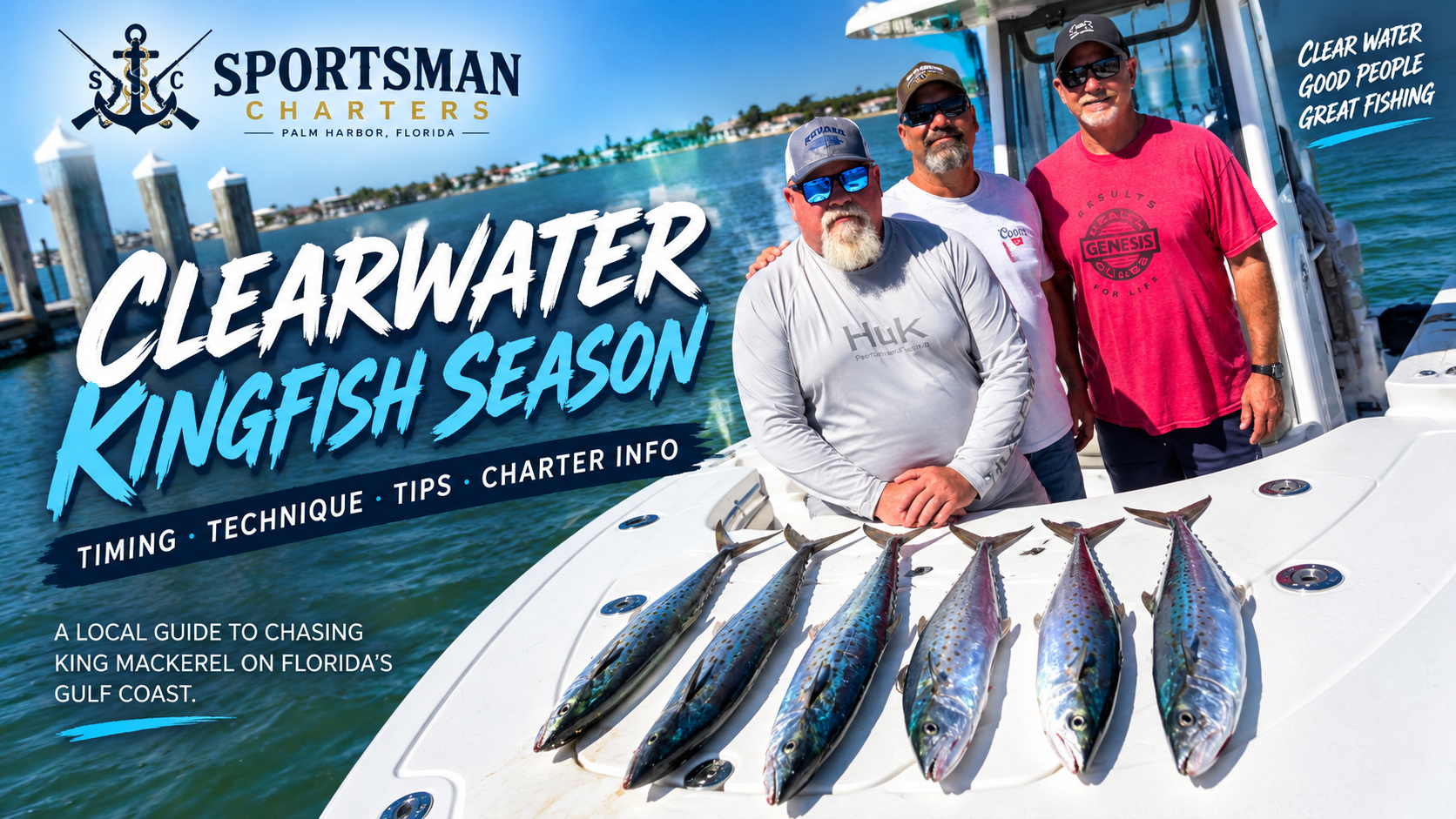
Clearwater kingfish season is one of our favorite times of year on Florida’s Gulf Coast. Few fish get the heart pumping like a king mackerel. Fast, powerful and unpredictable, kingfish are one of the most exciting seasonal species we chase.
Around Clearwater, kingfish don’t simply appear because the calendar says it’s fall or spring. Water temperature, bait movement, weather and Gulf conditions all play a role in when the migration arrives and how long the fish stick around.
In this guide, we’ll explain when Clearwater kingfish season typically heats up, what brings the fish into our area, how we target them, and what anglers should expect when booking a dedicated kingfish charter.
Whether you’re an experienced angler or looking for your first screaming-drag kingfish run, understanding how this fishery works will help you know what to expect when it’s time to chase the kings.
When Is Kingfish Season in Clearwater?
Kingfish are migratory, which means there isn’t one exact date when they suddenly show up and stay all season. Along the Clearwater coast, we typically see two primary kingfish runs each year – one in the spring and another in the fall.
Spring Kingfish Run: As Gulf water temperatures begin warming and large schools of bait move along the coast, kingfish follow. The spring run generally develops from March through May, although the exact timing can shift from year to year.
Fall Kingfish Run: As summer heat begins to fade and Gulf temperatures start cooling, kingfish make another push along Florida’s west coast. The fall run generally develops from September into November, with some of the best opportunities occurring when bait is concentrated near reefs, wrecks, passes and other nearshore structure.
The important thing to remember is that kingfish follow conditions—not calendars. Water temperature, bait availability, wind, currents and weather can all affect where the fish are and when the bite really turns on.
That’s why at Sportsman Charters, we watch the conditions and bait movement closely rather than simply declaring that kingfish season has started because a certain date arrived.
When Is Kingfish Season in Clearwater?
Water temperature is one of the biggest factors influencing kingfish movement along the Clearwater coast. These fish are constantly following comfortable water conditions and, just as importantly, the schools of bait they feed on.
During the fall, we start paying close attention as Gulf temperatures begin dropping out of the summer highs. Water in the upper 70s to low 80s can be especially favorable for kingfish activity, particularly when those temperatures coincide with large concentrations of bait moving through the area.
But water temperature isn’t a magic number. A reading on the thermometer alone doesn’t mean the kingfish have arrived. We also look for bait schools, birds working the surface, current, water clarity and recent fishing reports to help determine where the fish are moving.
The same process happens in reverse during the spring. As Gulf waters warm after winter, bait begins moving and kingfish migrate through the Clearwater area again.
That’s why the exact start and end of Clearwater kingfish season can change from one year to the next. Mother Nature sets the schedule—we just pay attention to the clues.
Find the Bait, Find the Kings
There’s an old rule when it comes to kingfish: find the bait and you’ll usually find the predators.
King mackerel are constantly on the move looking for an easy meal. Along the Clearwater coast, that often means following schools of baitfish around the reefs, wrecks and hard bottom we fish on our nearshore charters, as well as passes and other areas holding bait.
Before we ever put a kingfish bait in the water, we’re looking for signs of life. Birds diving, bait showering on the surface, marks on the sonar and schools of bait concentrated around structure can all tell us that we’re in an area worth fishing.
Once we locate productive water, we can slow troll live baits or work the area with other proven kingfish techniques. And because the bait and fish can move throughout the day, sometimes finding the kings means covering water and adjusting the plan as conditions change.
That’s one reason we recommend our 6-hour Kingfish Charter for anglers specifically looking to target king mackerel. More time gives us additional flexibility to locate bait, travel to productive areas and stay with moving fish.
Fishing isn’t about guaranteeing where a particular species will be. It’s about reading the conditions, making good decisions and putting our anglers in the best position possible when the opportunity comes.
How We Target King Mackerel in Clearwater
Once we find the bait and locate an area holding kingfish, the next step is presenting the right bait in the right way.
One of our favorite techniques is slow trolling live bait. Ballyhoo, small blue runners and other local baitfish can be extremely effective when presented naturally around reefs, wrecks, hard bottom and concentrations of bait.
Once we locate the kings, flatlining live bait can be extremely effective. Instead of constantly trolling, we can position the boat around the fish and send live baits back naturally with little or no added weight. This allows the bait to swim freely in the current, creating a natural presentation that’s tough for a feeding kingfish to resist. We can also stagger baits at different distances behind the boat to cover more water and give the kings multiple opportunities to strike.
Because king mackerel have razor-sharp teeth, we use wire leaders and proven kingfish setups, including spoons and one of my favorites, Reaper Rigs. These rigs are designed with kingfish in mind, and the trailing hook can be especially important because kings often slash at a bait rather than swallowing it whole.
Depending on the conditions, we may also troll artificial lures or dead baits while covering water. The goal is always the same: put the right presentation in front of a fast-moving predator and let the fish tell us what they want that day.
Kingfish tackle also requires a little finesse. We want enough equipment to handle a powerful fish, but the drag can’t be locked down. When a big king hits and makes that first blistering run, sometimes the best thing you can do is let it run.
That’s when the reel starts screaming—and everyone on the boat suddenly knows we found what we came looking for.
What Does a Kingfish Strike Feel Like?
If you’ve never hooked a kingfish before, the first strike is something you’ll remember.
A king may hit a bait so fast that there’s barely time to react. One second the bait is swimming behind the boat, and the next the reel is screaming as the fish takes off across the Gulf.
That first run is what kingfish are famous for. A good king can peel off a surprising amount of line in seconds, and trying to stop it too quickly is often exactly what you don’t want to do. Keep the rod loaded, let the drag do its job and hang on.
The fight isn’t over after that first run, either. Kings can make several powerful runs, change direction quickly and sometimes make another charge when they get close to the boat.
That’s what makes kingfish such a great charter fish. You don’t have to be an experienced angler to enjoy catching one. We’ll handle the setup, walk you through the fight and help you every step of the way.
And when that drag starts screaming, you’ll understand pretty quickly why we look forward to kingfish season every year.
Spring vs. Fall Kingfish Runs
Clearwater kingfish season gives us two primary opportunities to target migrating kingfish each year. Both the spring and fall runs can produce excellent fishing, but the conditions that bring the fish through our area are a little different.
Spring Kingfish Run
As Gulf waters begin warming after winter, baitfish start moving along the coast and kingfish aren’t far behind. Spring gives us our first major opportunity of the year to target kings around nearshore reefs, wrecks and concentrations of bait.
What We’re Watching:
Warming Gulf temperatures • Increasing bait activity • Nearshore reefs & wrecks • Birds & surface activity • Favorable Gulf conditions
Fall Kingfish Run
After the heat of summer, cooling Gulf temperatures help trigger another kingfish migration along the Clearwater coast. Large concentrations of bait can develop nearshore, creating excellent opportunities to intercept kings as they move through the area.
What We’re Watching:
Cooling Gulf temperatures • Concentrated bait schools • Reefs, wrecks & hard bottom • Birds & surface activity • Changing weather patterns
Which run is better? Both can produce incredible kingfish action. The better question is whether the water, bait, weather and fish are lining up right now.
Why We Recommend a 6-Hour Kingfish Charter
When anglers book a trip specifically to target kingfish, our 6-hour charter is the option we recommend most often.
Kingfish are constantly moving, and finding them can take some work. We may need time to locate quality live bait, check several areas, follow bait schools or move from one reef or wreck to another as conditions change throughout the day.
A 4-hour trip can absolutely produce great kingfish action when the fish and bait are close and everything lines up. But the additional time on a 6-hour trip gives us more flexibility to adapt when the fish don’t read the itinerary.
It also gives us more time to actually fish once we locate them. When the bite turns on, the last thing anyone wants to hear is that it’s already time to head back to the dock.
That’s why we consider the 6-hour Kingfish Charter the sweet spot for anglers whose main goal is chasing kings.
Can You Guarantee We’ll Catch Kingfish?
No, and any captain who guarantees a particular species of fish is setting the wrong expectation.
Kingfish are wild, migratory fish. Water temperature, bait movement, weather, currents, sea conditions and fishing pressure can all influence where they are and whether they’re feeding on any given day.
What we can do is prepare for the trip, monitor current conditions, locate bait, check productive areas and adjust our approach throughout the day. If the fish move, we move. If one technique isn’t producing, we’ll change tactics and keep working.
There may also be days when conditions simply aren’t right for targeting kingfish. If that happens, we’ll be upfront with you and discuss the best options for your trip rather than promise something Mother Nature isn’t offering.
We can’t guarantee what will bite. We can guarantee that we’ll put in the work to give you the best opportunity possible.
That’s fishing—and when everything comes together and that first king starts peeling line off the reel, it’s absolutely worth it.
Book a Clearwater Kingfish Charter
When the Gulf cools, the bait starts moving and the kings arrive, it’s time to go fishing.
Sportsman Charters offers private Clearwater kingfish charters during the spring and fall migrations. Every trip is just your group and Captain Gary aboard our 23-foot Sportsman center console.
We provide the fishing licenses, rods, tackle and bait—you just need to show up ready for a screaming drag.
4-Hour Kingfish Charter $650
A great option when the fish are close and conditions are lining up.
6-Hour Kingfish Charter — RECOMMENDED $850
Our preferred kingfish trip, with more time to locate bait, find the fish and adjust as conditions change.
8-Hour Kingfish Charter $1,050
Maximum fishing time and flexibility for anglers who want to make a full day of chasing kings.
Ready to Chase the Kings?
Clearwater kingfish season doesn’t run on a perfect calendar, so availability and fishing conditions can change throughout the spring and fall migrations.
Clear Water. Good People. Screaming Drags.
Sportsman Charters
Veteran & First Responder Owned
Palm Harbor • Dunedin • Clearwater Beach • Tarpon Springs